Rheumatic Diseases
Home - Rheumatic Diseases
Rheumatoid Arthritis
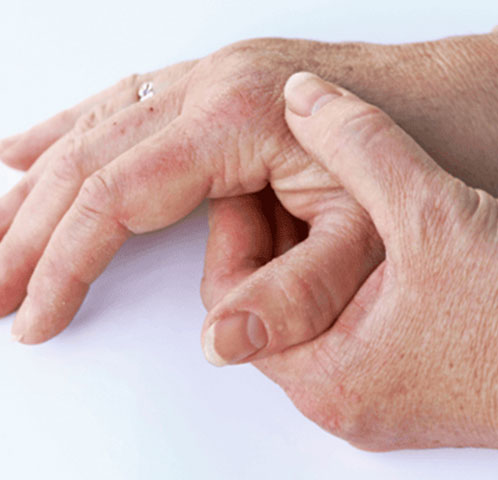
Rheumatoid arthritis (RA) is a chronic (ongoing) autoimmune disease that causes pain, swelling and stiffness in the lining of your joints (synovium). It most commonly affects the joints in your fingers, hands, wrists, knees, ankles, feet and toes. RA usually occurs in the same joints on both sides of your body, which makes it different from some other types of arthritis.
Uncontrolled inflammation damages cartilage, which normally acts as a “shock absorber” in your joints. In time, this can deform your joints. Eventually, your bone itself erodes. This can lead to the fusion of your joint (s).
Book Appointment

Psoriatic Arthritis
Psoriatic arthritis is a type of arthritis. It usually affects people who have psoriasis or a biological family history of psoriasis.
Arthritis is a common disorder that affects your joints. It causes pain and inflammation in and around your joints. Psoriasis causes inflammation in your skin. Psoriasis rashes are patches of discolored skin covered with scales. These thick, scaly areas are called plaques. It can also make your fingernails and toenails thicken and look flaky or pitted (covered in tiny indentations).
Book Appointment

Osteoarthritis
Osteoarthritis is the most common type of arthritis (a condition that affects your joints). Healthcare providers sometimes refer to it as degenerative joint disease or OA. It happens when the cartilage that lines your joints is worn down over time and your bones rub against each other when you use your affected joints.
Usually, the ends of bones in your joints are capped in a layer of tough, smooth cartilage. Cartilage is like a two-in-one shock absorber and lubricant — it helps the bones in your joints move past each other smoothly and safely. If you have osteoarthritis, the cartilage in your affected joints wears away over time. Eventually, your bones rub against each other when you move your joints.
Book Appointment

Fibromyalgia
Fibromyalgia is a long-term (chronic) health condition that causes pain and tenderness throughout your body. It causes musculoskeletal pain and fatigue.
People with fibromyalgia usually experience symptoms that come and go in periods called flare-ups. Sometimes, it can feel exhausting and challenging to navigate living with fibromyalgia. The peaks and valleys between feeling good and suddenly having a flare-up of symptoms can feel overwhelming. Fibromyalgia is real, and so is how you feel.
Experts don’t know what causes fibromyalgia, but studies have found that certain health conditions, stress and other changes in your life might trigger it. You might be more likely to develop fibromyalgia if one of your biological parents has it.
Book Appointment

Gout
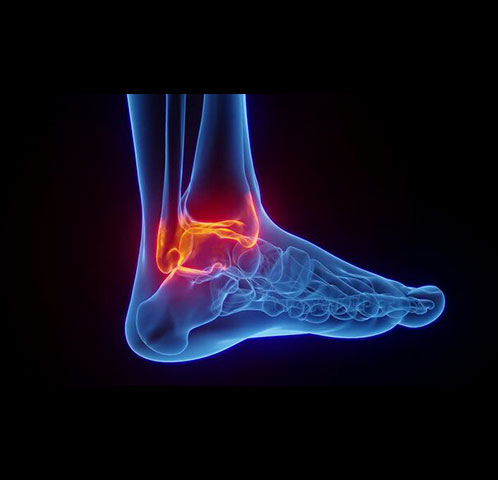
Gout is a painful form of arthritis. When your body has extra uric acid, sharp crystals can form in your joints (usually your big toe). Flare-ups of symptoms like pain and swelling come and go in periods called gout attacks. Treatment is usually a combination of symptom management and changing your diet.
Gout is a form of inflammatory arthritis that causes pain and swelling in your joints. Gout happens when there’s a buildup of uric acid in your body.Gout most commonly affects your big toe joint. But it can affect other joints, including your: Knees, Ankles, Feet,Hands and Wrists, Elbows.
Gout symptoms come and go (recur) in episodes called flares or gout attacks. A healthcare provider will suggest medications and changes to your diet that will lower your uric acid levels and minimize how often you experience gout attacks in the future.
Book Appointment
Ankylosing Spondylitis
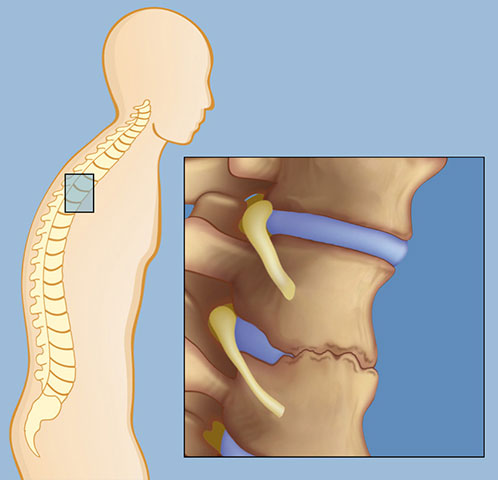
Ankylosing spondylitis is a type of arthritis that affects joints in your spine. Healthcare providers sometimes call it axial spondylarthritis.
Ankylosing spondylitis (AS) also affects the joints where the base of your spine meets your pelvis (your sacroiliac joints). Your sacroiliac joints are the connection between your spine and pelvis. Specifically, they’re the place where the sacrum (the triangle-shaped last section of your spine) meets the ilium (the top and back part of your pelvis).
Book Appointment
Systemic lupus erythematosus (SLE)
Lupus is a condition that causes inflammation throughout your body. It’s an autoimmune disease, which means your immune system damages your body instead of protecting it. You may experience symptoms throughout your body depending on where your autoimmune system damages tissue, including in your: Skin, Blood, Joints, Kidneys, Brain, Heart, Lungs.
Visit a healthcare provider if you notice new pain, rashes or changes to your skin, hair or eyes.
Book Appointment

Connective Tissue Diseases
A connective tissue disease is any disease that affects the parts of the body that connect the structures of the body together.
Connective tissues are made up of two proteins: collagen and elastin. Collagen is a protein found in the tendons, ligaments, skin, cornea, cartilage, bone and blood vessels. Elastin is a stretchy protein that resembles a rubber band and is the major component of ligaments and skin. When a patient has a connective tissue disease, the collagen and elastin are inflamed. The proteins and the body parts they connect are harmed.
Book Appointment